
PACIFYING THE NORTHERN FRONTIER GILGIT AGENCY UNDER BRITISH RULE
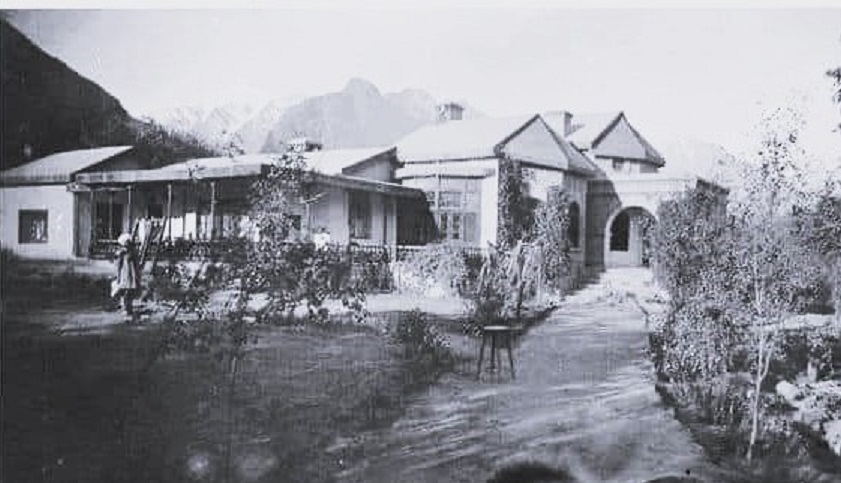
The Northwest Frontier The Three Swords of Meer Jaffir (Part 1 & Part 2) Gun Running to the Northwest Frontier A Tale of Subedar Major Mauladad (1822-1890) The Buddhist Road and The Storming of the Malakand Pass 1895 The Guides Saab Ka Risala 1846-1900 Safe Conduct – A tale about Syed Wazir Ali (Part 1 & Part 2) Under The Raj Revisiting the Great Arc of the Meridian Neither Freedom nor Salt The Lahore Cantonment of Mian Mir Vale Hunting in India and the Peshawar Vale Hunt Feeding the Armies of the Raj Eating Curries in London Signposts, Tablets & Way Markers of the Raj British Indian Army & State Forces Under Pelican Wings— Bahawalpur State Forces On the Departure of Gowhar-i-Taj’s Own Infantry Battalion to Burma. The Irregular Cavalry through the Lens of a Painting The Indian Mountain Artillery Soldiers of the Salt Range Subedar Major Mauladad The Anglo-Sikh Wars Ranjit Singh Ka Topkhana Part 1 Ranjit Singh Ka Topkhana Part 2 Ranjit Singh Ka Topkhana Part 3 The Anglo-Sikh Wars & The Battle of Chillianwala Finding Zamzama’s Twin The Death of Capt John Anderson, Bengal Artillery Roads, Railways & Bridges Bridging the Mighty Indus Crossing Rivers in Punjab On the Tracks of the Frontier Mail Pre Independence Personalities Who was Sahabzada Sir Abdus Samad Khan A Gnarled Oak with a Broken Heart Heritage Of Sahabzada Yaqub Dr Khalifa Abdul Hakim – The Islamic Cultural Renaissance Philosopher 24 Marris Road, Aligarh – Dr Abdullah Butt Maj Gen Syed Shahid Hamid An Indian Lieutenant at the 1936 Berlin Olympics The Power of a Mother’s Prayers A Muslim Instructor at Staff College Entering the Hallowed Ranks of the Indian Political Service. Edit Template PACIFYING THE NORTHERN FRONTIER: GILGIT AGENCY UNDER BRITISH RULE April 1, 2026 Syed Ali Hamid Within the shadows of the Great Game played out by the British and Russian Empires in the late 1800s, there were two havens for Europeans: Chini Bagh (the Chinese Garden), the residence of the British Consul to Kashgar, and the Agency Bungalow in Gilgit. Explorers, archeologists, army officers ostensibly out hunting for trophies, cartographers, spies, and bonafide diplomats savored a touch of ‘civilization’ before again heading out on their wearisome and risky journey. The Agency Bungalow was the residence of the Political Officer / Political Agent who was responsible for managing the affairs of the principalities and ensuring that the interests of the Crown were safeguarded. However, the Maharaja of Kashmir was initially very reluctant to permit a British officer to be stationed in Gilgit and after the Treaty of Amritsar in 1846. under which the British sold the territories of Kashmir to Gulab Singh, it took 40 years for the State of Kashmir to accept a permanent Political Officer in Gilgit, and another 46 years for the post to be upgraded to that of a Political Agent. Since the British lacked information about the physical and political geography north and east of River Indus, the treaty stated that the northern and eastern borders of the State of Jammu and Kashmir (J&K) would be defined after a survey. In the meantime, the Maharaja claimed Gilgit because it was part of the Sikh territories but his garrison was annihilated in 1852 when Gilgit rebelled. However, while the British were preoccupied with consolidating their rule after the events of 1857, Gulab Singh’s successor, Ranbir Singh retook it in 1860 and extended his authority to the Dardi states of Chilas, Darel, Nagar, Yasin, Punial, Ishkuman, and Astor. He also extended his suzerainty over Hunza, which was strategically the most important as it commanded the routes from Eastern Turkistan through the passes of Mintaka, Khunjerab, and Shimshal. Ranbir Singh sought to pursue an autonomous foreign policy and forge trade relations with Eastern Turkistan and Afghanistan. The Treaty of Amritsar had imposed no restrictions on this matter. However, as the Russians began expanding into the region, the British grew apprehensive about Ranbir’s intentions. Their unease heightened when the Maharaja established a military post across the Karakoram along the Leh-Kashgar trade route. A very vibrant trade existed from Central Asia into Srinagar through Leh and Gilgit and the Maharaja may only have been protecting it from marauders but the British perceived it as an endeavor to extend his northern borders. Adding to their concerns, a member of the Kashmir Survey Party formed in 1855, marked on official British Indian maps the north-eastern frontier of the State well into the Trans-Karakoram region. The British censured the surveyor and informed the Maharaja that the revised limits were unacceptable. They also stationed an agent in Leh to closely monitor developments. Between 1870-73, the government sent Douglas Forsythe on two missions to Yarkand to establish diplomatic relations with Yaqub Beg, the separatist anti-Chinese ruler, and explore trade opportunities. He was also tasked to gather information. On return from his second mission, Forsythe reported that the Ishkoman and Baroghil Passes (the two principal passes of the great mountain range separating the valley of the Oxus from Chital and Yasin), were easily passable by troops, implying the possibility of a Russian invasion. The Russians had captured Tashkent in 1865 and within a decade subjugated the whole of Western Turkistan and pushed their frontier closer to British India. Consequently, Forsythe’s information created shockwaves in London and when Lord Lytton was appointed as viceroy in 1876, he was instructed to view the frontier administration as an ‘imperial concern’ and take appropriate measures to achieve the ‘imperial objectives’. Of immediate concern was the vulnerability of the Dardi principalities of Hunza, Nagar, Chials, Yasin, Punail, and others. The valley of Gilgit was not a principality but was invaded and seized by either one or the other neighbors. Lord Curzon termed Gilgit the Northern Gate of India because all the routes through the eastern passes over the Hindu Kush dropped down into the valley of the Gilgit River and its tributaries. It also commanded the approach from Chitral over the Shandur. Through extensive negotiations with the Maharaja conducted at