
ASPIRING FOR THE INDIAN POLITICAL SERVICE – A FAILED ATTEMPT
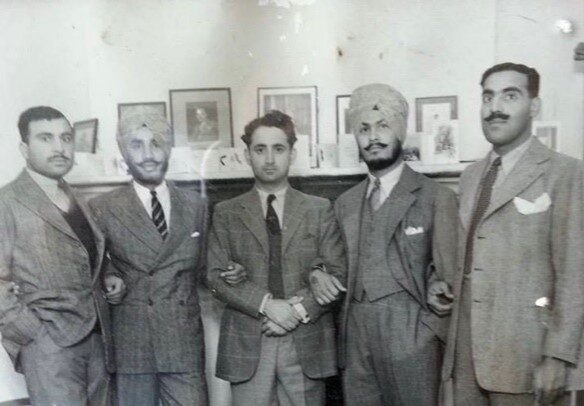
The Northwest Frontier The Three Swords of Meer Jaffir (Part 1 & Part 2) Gun Running to the Northwest Frontier A Tale of Subedar Major Mauladad (1822-1890) The Buddhist Road and The Storming of the Malakand Pass 1895 The Guides Saab Ka Risala 1846-1900 Safe Conduct – A tale about Syed Wazir Ali (Part 1 & Part 2) Under The Raj Revisiting the Great Arc of the Meridian Neither Freedom nor Salt The Lahore Cantonment of Mian Mir Vale Hunting in India and the Peshawar Vale Hunt Feeding the Armies of the Raj Eating Curries in London Signposts, Tablets & Way Markers of the Raj British Indian Army & State Forces Under Pelican Wings— Bahawalpur State Forces On the Departure of Gowhar-i-Taj’s Own Infantry Battalion to Burma. The Irregular Cavalry through the Lens of a Painting The Indian Mountain Artillery Soldiers of the Salt Range Subedar Major Mauladad The Anglo-Sikh Wars Ranjit Singh Ka Topkhana Part 1 Ranjit Singh Ka Topkhana Part 2 Ranjit Singh Ka Topkhana Part 3 The Anglo-Sikh Wars & The Battle of Chillianwala Finding Zamzama’s Twin The Death of Capt John Anderson, Bengal Artillery Roads, Railways & Bridges Bridging the Mighty Indus Crossing Rivers in Punjab On the Tracks of the Frontier Mail Pre Independence Personalities Who was Sahabzada Sir Abdus Samad Khan A Gnarled Oak with a Broken Heart Heritage Of Sahabzada Yaqub Dr Khalifa Abdul Hakim – The Islamic Cultural Renaissance Philosopher 24 Marris Road, Aligarh – Dr Abdullah Butt Maj Gen Syed Shahid Hamid An Indian Lieutenant at the 1936 Berlin Olympics The Power of a Mother’s Prayers A Muslim Instructor at Staff College Entering the Hallowed Ranks of the Indian Political Service. Edit Template ASPIRING FOR THE INDIAN POLITICAL SERVICE – A FAILED ATTEMPT March 28, 2026 Syed Ali Hamid One of the lesser known but decidedly at the apex of the administrative machinery of British India was the Foreign and Political department. Its genesis lay in a department which was created in 1783 by the East India Company for conducting “secret and political business”. Since in the India of that period Persian was the language of diplomatic correspondence, the head of the department was known as the ‘Persian Secretary’. Its primary responsibility was dealing with the Princely States through British Residents appointed from the Department. It also housed the officers of British India’s diplomatic service i.e. its emissaries to the countries surrounding India and the Trucial States in the Gulf. It was staffed by officers from the Indian Political Service (IPS) who were generally referred to as Political Officers, or colloquially as “politicals”. Some famous names in the history of the Middle East served as Political Officers including Sir Percy Coxs who masterminded the British policy in this region during the First World War. The Department was controlled by the Viceroy and when the North West Frontier Province (NWFP) was separated from the Punjab in 1901, to ensure that the new Province was directly under his control Lord Curzon decided that the officers who had chosen to make their careers in the frontier districts of Balochistan and the NWFP were also from this department. They were designated as Political Agents (PAs) and amongst the notables were captains of the Frontier like Sir Roos-Keppel who spoke fluent Pushto and authored a book on the language, Olaf Caroe, the last British Governor of the NWFP and Sir Rupert Hay the Chief Commissioner in Balochistan from 1943–46. The term continues to be applied till to date for the administrators of the Agencies in the Federally Administered Tribal Areas. In 1914, the department was reorganized as the Foreign and Political Department, with two separate secretaries: the Political Wing dealt with the princely states and other Asian kingdoms, while the Foreign Department a forerunner of the Foreign Service of both Pakistan and India, focused on engagement with the European powers. Between half to two thirds of the Politicals were recruited from the army because they were cheaper to employ and in larger number than the civil servants who were the next most abundant. Employees of the political service were predominantly British although small numbers of Indians were employed. The Politicals were a small body of about 150 officers, whose varied functions were little known even to their colleagues in India. They were held in awe and referred to as ‘The Twice Born’, a progression of the terminology sometimes used in respect of members the Indian Civil Service: ‘The Heaven-Born’. Those jealous of its stature referred to the IPS cadre as ‘civil servants who didn’t want to work and soldiers who didn’t want to fight’. One of the applicants from the army for the IPS was Syed Shahid Hamid. He was commissioned from Sandhurst in 1933 and joined 3rd Cavalry, a recently Indianised regiment in which he spent six years. The second half of this term were not easy as he did not get along with the second-in-command who was subsequently promoted to command the regiment. Since there was no vacancy for him in the other two Indianised cavalry regiments, Shahid sought an entry onto the hallowed ranks of the Indian Political Service (IPS). At the time he applied Shahid was a lieutenant commanding a detachment of 3rd Cavalry in Allahabad. His close friend in Allahabad was Muhammad Sharif Khan (10th Baloch Regiment), the son of the legendry Khan Bahadur Sardar Mughal Baz Khan of the Guides and the IPS. Many years later Col Sharif’s son Dr. Hamid Zeb sent me a picture of our fathers’ together in 1938. It is possible that his friend Sharif Khan gave Shahid Hamid the idea of applying for the IPS. My father’s files contain a set letters related to the case. The first letter in the correspondence trail sent by his regiment in August 1937 in response to a telegram sent by Shahid informs him that as per an extract governing the terms of application to the IPS, he should have corresponded directly with the Foreign and Political Department.
Engineering Boat Bridges and Crossing Rivers in Northern Punjab
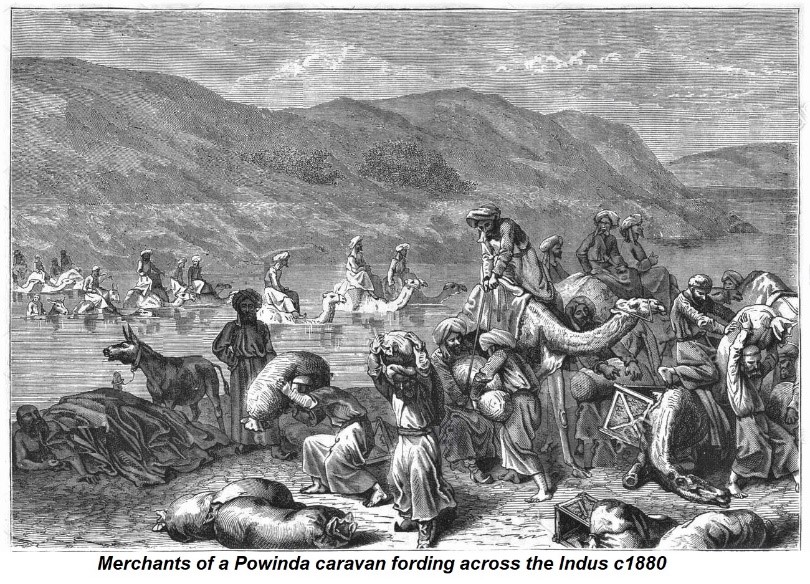
The Northwest Frontier The Three Swords of Meer Jaffir (Part 1 & Part 2) Gun Running to the Northwest Frontier A Tale of Subedar Major Mauladad (1822-1890) The Buddhist Road and The Storming of the Malakand Pass 1895 The Guides Saab Ka Risala 1846-1900 Safe Conduct – A tale about Syed Wazir Ali (Part 1 & Part 2) Under The Raj Revisiting the Great Arc of the Meridian Neither Freedom nor Salt The Lahore Cantonment of Mian Mir Vale Hunting in India and the Peshawar Vale Hunt Feeding the Armies of the Raj Eating Curries in London Signposts, Tablets & Way Markers of the Raj British Indian Army & State Forces Under Pelican Wings— Bahawalpur State Forces On the Departure of Gowhar-i-Taj’s Own Infantry Battalion to Burma. The Irregular Cavalry through the Lens of a Painting The Indian Mountain Artillery Soldiers of the Salt Range Subedar Major Mauladad The Anglo-Sikh Wars Ranjit Singh Ka Topkhana Part 1 Ranjit Singh Ka Topkhana Part 2 Ranjit Singh Ka Topkhana Part 3 The Anglo-Sikh Wars & The Battle of Chillianwala Finding Zamzama’s Twin The Death of Capt John Anderson, Bengal Artillery Roads, Railways & Bridges Bridging the Mighty Indus Crossing Rivers in Punjab On the Tracks of the Frontier Mail Pre Independence Personalities Who was Sahabzada Sir Abdus Samad Khan A Gnarled Oak with a Broken Heart Heritage Of Sahabzada Yaqub Dr Khalifa Abdul Hakim – The Islamic Cultural Renaissance Philosopher 24 Marris Road, Aligarh – Dr Abdullah Butt Maj Gen Syed Shahid Hamid An Indian Lieutenant at the 1936 Berlin Olympics The Power of a Mother’s Prayers A Muslim Instructor at Staff College Entering the Hallowed Ranks of the Indian Political Service. Edit Template Engineering Boat Bridges and Crossing Rivers in Northern Punjab March 28, 2026 Syed Ali Hamid The evidence of constructing stone and masonry bridges dates back two-and-a-half millenniums. In 500 BCE, a Chinese engineer constructed a single arch masonry and stone bridges of 37 meters that still stands. The remains of Roman aqueducts is proof that their engineers were skilled at constructing large bridges. In the Middle East one of the oldest surviving bridge is the Shahrestan in Isfahan, Iran which has 13 large and 8 small arches and whose foundations date back to the Sasanian era (3rd to 7th century C.E.). Delhi has the remains of a number of arched bridges that were constructed from the reign of Alauddin Khilji’s (1296-1316) onwards. However, one of the best examples of masonry bridges in the subcontinent is the Shahi bridge with 10 arches over River Gomti in Jaunpur UP that was constructed in the 16 century during the reign of Emperor Akbar and is still safe for pedestrians. The science of engineering military bridges also dates back two-and-a-half millenniums. In 480 BCE, the Phoenicians constructed a pontoon bridge for the Persian Army to cross over the Dardanelles. In his Anabasis of Alexander, the Greek historian Arrian credits Alexander with constructing a bridge of boats across the Indus and believed that the skeleton framework was of huge wicker baskets. However other historian state that it was constructed of boats which were subsequently cut into smaller sections and transported to the River Jhelum. The Roman engineers were also skilled at crossing large waterways and during the Gallic War of 55-53 BCE, they constructed wooden beam bridges across the Rhine for the army of Julius Ceaser. Armies on the march in Northern India crossed rivers either by ferry or fords or boat bridges. The last two options were possible only in the dry months when the rivers generally shrank to one-third their size and volume, and that is why it was feasible to campaign during these months. Alexander forded the Indus at Hund in the winter months and fought Porus on the banks of the Jhelum in May. However, as he penetrated further into the land of five major rivers during the monsoons, his army nearly rebelled. All 17 of Mahmud of Ghazani’s campaigns in India were during winter and Emperor Babur crossed into India in early 1526 and fought the First Battle of Panipat in April that year. The Second Battle of Panipat was fought in November 1556 and the third between Ahmed Shah Durrani and the Marattha Empire was fought in January 1761. Like Mahmud of Ghazni, all nine of Durrani’s campaigns into the Punjab were during the dry season from September/October till May/June. After Alexander’s boat bridge at Attock, the next recorded evidence I found of a boat bridge over the Indus is during Taimur’s invasion of India in 1398. He crossed the river east of Bannu over a bridge built of boats and three legged trestles that was constructed in two days. However, another source states that the bridge was made of rafts and bundles of reeds. The most famous of the crossings over the Indus with a boat bridge was at Khairabad (more popularly known as Attock after the fort) and became a permanent feature during the rule of the Mughal Emperors. In fact, the Mughal rulers went to extreme lengths to ensure that communication was uninterrupted as far as possible over all the rivers of the Punjab. In September 1652 heavy rains in the entire Indus plain flooded all the rivers and streams. A bridge of 40 boats was constructed at Jalala on the Indus, while 55, 56 and 50 boats were used to bridge the Jhelum, Chenab and Ravi respectively. Further down the province, a bridge of 104 boats was erected at Buh over the combined waters of the Beas and Sutlej. Maharaja Ranjit Singh also periodically constructed a boat bridge over the Indus when the territory came under his control. A report by a British Engineer officer who crossed the Indus in 1839, provides a detailed description of the Bridge of Boats at Attock. The boats were owned by the Mallees who were brought to this site by Emperor Akbar 300 years before. The bridge could be constructed at two locations. Upstream it required
BRIDGING THE MIGHTY INDUS
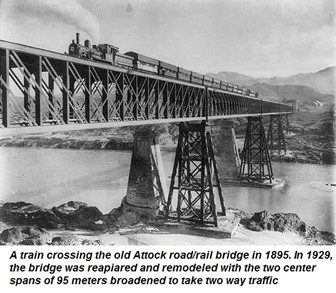
The Northwest Frontier The Three Swords of Meer Jaffir (Part 1 & Part 2) Gun Running to the Northwest Frontier A Tale of Subedar Major Mauladad (1822-1890) The Buddhist Road and The Storming of the Malakand Pass 1895 The Guides Saab Ka Risala 1846-1900 Safe Conduct – A tale about Syed Wazir Ali (Part 1 & Part 2) Under The Raj Revisiting the Great Arc of the Meridian Neither Freedom nor Salt The Lahore Cantonment of Mian Mir Vale Hunting in India and the Peshawar Vale Hunt Feeding the Armies of the Raj Eating Curries in London Signposts, Tablets & Way Markers of the Raj British Indian Army & State Forces Under Pelican Wings— Bahawalpur State Forces On the Departure of Gowhar-i-Taj’s Own Infantry Battalion to Burma. The Irregular Cavalry through the Lens of a Painting The Indian Mountain Artillery Soldiers of the Salt Range Subedar Major Mauladad The Anglo-Sikh Wars Ranjit Singh Ka Topkhana Part 1 Ranjit Singh Ka Topkhana Part 2 Ranjit Singh Ka Topkhana Part 3 The Anglo-Sikh Wars & The Battle of Chillianwala Finding Zamzama’s Twin The Death of Capt John Anderson, Bengal Artillery Roads, Railways & Bridges Bridging the Mighty Indus Crossing Rivers in Punjab On the Tracks of the Frontier Mail Pre Independence Personalities Who was Sahabzada Sir Abdus Samad Khan A Gnarled Oak with a Broken Heart Heritage Of Sahabzada Yaqub Dr Khalifa Abdul Hakim – The Islamic Cultural Renaissance Philosopher 24 Marris Road, Aligarh – Dr Abdullah Butt Maj Gen Syed Shahid Hamid An Indian Lieutenant at the 1936 Berlin Olympics The Power of a Mother’s Prayers A Muslim Instructor at Staff College Entering the Hallowed Ranks of the Indian Political Service. Edit Template BRIDGING THE MIGHTY INDUS March 28, 2026 Syed Ali Hamid On the way to Peshawar along the Grand Trunk Road if you take a left after crossing the concrete bridge over the River Indus at Begum ki Sarai, two kilometers onwards, you will be rewarded by a magnificent view of a 460-meter-long steel road/rail bridge that is supported on three massive masonry and stone pillars. The Attock Bridge as it is known is just one, and the most impressive of five bridges that the British constructed over the Indus in less than 50 years. The development of a railway network in north western India began in 1855 with three lines, the Scinde, Punjab and Delhi Railways. Unlike the tracks extending from Bombay and Calcutta which had commercial worth, the ones in the northwest were for strategic purposes. Over the next 25 years, the network spread up from Karachi towards Sukkur and northwest from Delhi towards Lahore and the logistic base of the British India Army at Rawalpindi. It also extended down from Lahore towards Multan and Bahawalpur. By 1878, the railways had bridged the five rivers of the Punjab: the bridge over the Beas (1869), the bridge over the Ravi at Jassar and Lahore, the Alexandra Bridge over the Chenab at Gujrat (1875), the mile long bridge over the Jhelum (1876), the bridges over the Sutlej at Phillaur (1870) and the Empress Bridge at Bahawalpur (1878). However the formidable barrier of the River Indus now lay ahead. With their earlier experience, engineers were aware that bridging rivers at open sites where the course was not confined between rocky hills was more difficult. Therefore the early road/rail bridges across the Indus were constructed at Attock, Sukkur and Khushalgarh where the river was confined. From the time that the East India Company annexed the Punjab in 1849, replacing the bridge of boats on the Indus at Attock with a permanent solution was under serious consideration and in 1860 work commenced on building a 7.3 meter wide and 2½ km long tunnel. However due to leakages, machinery breakdown and cost overruns, the project was abandoned when only 78 meters remained between the two ends of the boring. The Second Afghan War gave an impetus to extending the railway line till Peshawar and by 1879, the line from Rawalpindi had arrived at Attock on the southern side of the Indus. A year later it had also been laid from the other bank onwards till Peshawar but the construction of the bridge remained. When the Indus arrives at the Attock Gorge it has already traversed 1,500 km draining an area of 310,800 sq km and during floods, it could rise over 20 meters or more. In fact in 1841 when a glacial dam across the Shyok River burst the river rose 30 meters at Attock and washed away a Sikh Army camped upstream on the Plains of Charch. Therefore the engineers selected a site that would give the rail/road bridge headroom of 30 meters above the low water level. The bridge was to be constructed in five steel spans with the two of 95 meters being the longest in India at that time. The main challenge was laying the foundation of the only pier that was in the river channel that had to rest on a rocky shoal. Working in the fast-flowing icy cold water, it took a year for a coffer dam to be constructed and when the water was pumped out, the condition of the rock that was reveled at the bottom was alarming. It was badly honeycombed and deeply fissured – highly unsuitable for a pier foundation. But time was short and the girders and trestles had already arrived from Britain. The area inside the coffer dam was filled with concrete and work commenced on erecting the pier. The piers were not like the ones we see supporting the Attock Bridge today i.e. huge structures of masonry and concrete. Good building stone at the site was scarce and instead trestles of riveted wrought iron (like pylons) were constructed which were considered better at withstanding earthquakes. The working speed was enviable with all four trestle piers erected in as many months. The erection of the timber staging and the spans on top of them were completed within six months
A JOURNEY ALONG THE TRACKS OF TIME
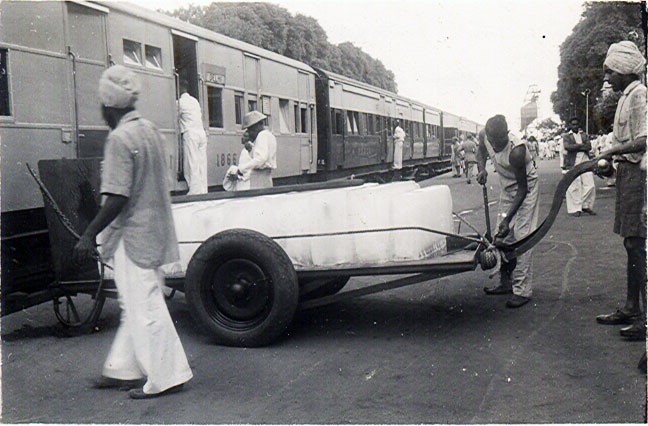
The Northwest Frontier The Three Swords of Meer Jaffir (Part 1 & Part 2) Gun Running to the Northwest Frontier A Tale of Subedar Major Mauladad (1822-1890) The Buddhist Road and The Storming of the Malakand Pass 1895 The Guides Saab Ka Risala 1846-1900 Safe Conduct – A tale about Syed Wazir Ali (Part 1 & Part 2) Under The Raj Revisiting the Great Arc of the Meridian Neither Freedom nor Salt The Lahore Cantonment of Mian Mir Vale Hunting in India and the Peshawar Vale Hunt Feeding the Armies of the Raj Eating Curries in London Signposts, Tablets & Way Markers of the Raj British Indian Army & State Forces Under Pelican Wings— Bahawalpur State Forces On the Departure of Gowhar-i-Taj’s Own Infantry Battalion to Burma. The Irregular Cavalry through the Lens of a Painting The Indian Mountain Artillery Soldiers of the Salt Range Subedar Major Mauladad The Anglo-Sikh Wars Ranjit Singh Ka Topkhana Part 1 Ranjit Singh Ka Topkhana Part 2 Ranjit Singh Ka Topkhana Part 3 The Anglo-Sikh Wars & The Battle of Chillianwala Finding Zamzama’s Twin The Death of Capt John Anderson, Bengal Artillery Roads, Railways & Bridges Bridging the Mighty Indus Crossing Rivers in Punjab On the Tracks of the Frontier Mail Pre Independence Personalities Who was Sahabzada Sir Abdus Samad Khan A Gnarled Oak with a Broken Heart Heritage Of Sahabzada Yaqub Dr Khalifa Abdul Hakim – The Islamic Cultural Renaissance Philosopher 24 Marris Road, Aligarh – Dr Abdullah Butt Maj Gen Syed Shahid Hamid An Indian Lieutenant at the 1936 Berlin Olympics The Power of a Mother’s Prayers A Muslim Instructor at Staff College Entering the Hallowed Ranks of the Indian Political Service. Edit Template A JOURNEY ALONG THE TRACKS OF TIME – THE FRONTIER MAIL March 28, 2026 Syed Ali Hamid I was introduced to the Frontier Mail while gathering information on the operations of the British Indian Army in the NWFP and came across a photo taken of the Frontier Mail arriving at Rawalpindi Station. The Frontier Mail was operated by the Bombay, Baroda and Central India Railway (BB&CIR). It was flagged off in 1928 for carrying passengers and mail from Bombay to Delhi via Ratlam and Mathura, and in collaboration with the North Western Railways (NWR), beyond to Peshawar, via Lahore and Rawalpindi (which was then the detraining point for Kashmir). The distance from Bombay to Peshawar was 2,335 kms which the train covered in a record time of 72 hours and at one time it could claim being the fastest long distance train in British India. The Great India Peninsular Railways (GIPR) who was the main competitors of BB&CIR already had the ‘Punjab Limited’ running between Bombay and Peshawar, but the journey took several days. The BB&CIR took pride in the punctuality of the Frontier Mail and 9 times out of 10 you could you could set your watch by it! In August 1929, eleven months after its inauguration, when the train arrived 15 minutes late at Peshawar, there was a big uproar among the railway circles, with the driver being asked to explain the reasons for this ‘inexcusable’ delay. I mentioned this to my father-in-law Syed Ghiasudin Ahmed who is one of the oldest surviving members of the Indian Civil Service. With his uncanny memory even at the age of 92 years, in his faltering voice he said “I know why it was late on one occasion. Iskander Mirza (later President of Pakistan) was the Sub-Divisional Magistrate at Nowshera. He and a friend Rana Saleh Muhammad were having a round of drinks in the evening when they felt an urge for Fried Fish. The Frontier Mail was stopped at the station and remained there for the few minutes that it took for the fish to be fried at the Restaurant Car. The matter was of course reported and Iskander Mirza was given a ‘displeasure’. The Frontier Mail was considered more than just a train: it was rather a conversation piece, an exotic fast running train that whisked passengers through India and set them down deep into the North West Frontier town of Peshawar. In 1930, The Times of London described it as ‘one of the most famous express trains within the British Empire’. The train was so famous that a film was named after it starring ‘Fearless Nadia’ the star of Indian stunt and action films of the 1930s & 40s. Blonde, blue-eyed Nadia, born to a Scot soldier and a Greek dancer wore daring shorts and tight, sleeveless blouses. She slashed villains with her whip, rode galloping horses, threw men about like toys and fought them on the roof top of the Frontier Mail. The Frontier Mail used to depart from Ballard Pier Mall Station at Bombay harbor; the entraining point for passengers arriving from England by ship. It was also a pick up point for mail brought in from Europe by the P & O mail steamers like the S.S. Rawalpindi, one of the first P & O ships with a refrigerated hold. The mail carried by the train provided a critical link between British troops stationed in the Punjab and way out stations like Razmak in the Frontier and their relatives and loved ones back home in England. Over its 20 years of service to the Jewel in the Crown, it carried Governors and Generals, Civil Servants and Soldiers and a multitude of Indians along its route. In 1944, while Subhas Chandra Bose of Indian National Army fame, was using it for escaping to Afghanistan enroute to Hitler’s Germany, the ‘to be famous’ singer Mohammed Rafi boarded its III Class compartment at Lahore to seek his destiny in Bombay. It is also likely that the young Yusuf Khan from Peshawar seeking stardom, travelled the Frontier Mail from to Bombay where he came to be recognized and remembered as Dilip Kumar. In the 1930s and 1940s, the Frontier Mail carried 450 passengers in six carriages. It wasn’t as luxurious but was a close second to
A MUSLIM INSTRUCTOR AT STAFF COLLEGE QUETTA 1943-45
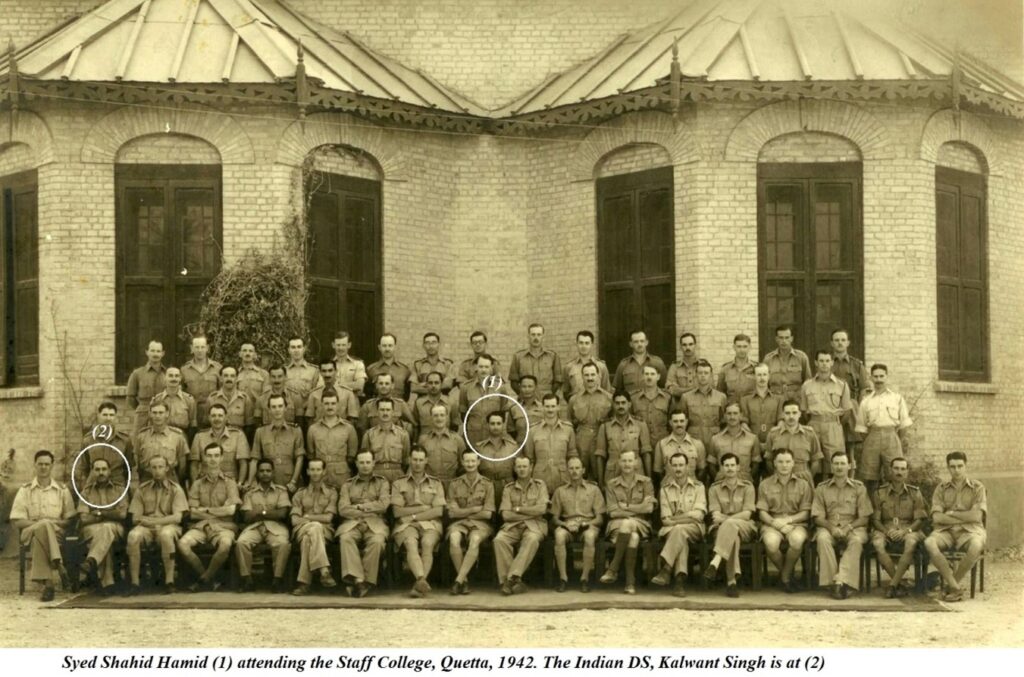
The Northwest Frontier The Three Swords of Meer Jaffir (Part 1 & Part 2) Gun Running to the Northwest Frontier A Tale of Subedar Major Mauladad (1822-1890) The Buddhist Road and The Storming of the Malakand Pass 1895 The Guides Saab Ka Risala 1846-1900 Safe Conduct – A tale about Syed Wazir Ali (Part 1 & Part 2) Under The Raj Revisiting the Great Arc of the Meridian Neither Freedom nor Salt The Lahore Cantonment of Mian Mir Vale Hunting in India and the Peshawar Vale Hunt Feeding the Armies of the Raj Eating Curries in London Signposts, Tablets & Way Markers of the Raj British Indian Army & State Forces Under Pelican Wings— Bahawalpur State Forces On the Departure of Gowhar-i-Taj’s Own Infantry Battalion to Burma. The Irregular Cavalry through the Lens of a Painting The Indian Mountain Artillery Soldiers of the Salt Range Subedar Major Mauladad The Anglo-Sikh Wars Ranjit Singh Ka Topkhana Part 1 Ranjit Singh Ka Topkhana Part 2 Ranjit Singh Ka Topkhana Part 3 The Anglo-Sikh Wars & The Battle of Chillianwala Finding Zamzama’s Twin The Death of Capt John Anderson, Bengal Artillery Roads, Railways & Bridges Bridging the Mighty Indus Crossing Rivers in Punjab On the Tracks of the Frontier Mail Pre Independence Personalities Who was Sahabzada Sir Abdus Samad Khan A Gnarled Oak with a Broken Heart Heritage Of Sahabzada Yaqub Dr Khalifa Abdul Hakim – The Islamic Cultural Renaissance Philosopher 24 Marris Road, Aligarh – Dr Abdullah Butt Maj Gen Syed Shahid Hamid An Indian Lieutenant at the 1936 Berlin Olympics The Power of a Mother’s Prayers A Muslim Instructor at Staff College Entering the Hallowed Ranks of the Indian Political Service. Edit Template A MUSLIM INSTRUCTOR AT STAFF COLLEGE QUETTA 1943-45 March 28, 2026 Syed Ali Hamid My father, Maj Gen Syed Shahid Hamid was one of the first Muslim officers on the faculty of the Staff College, Quetta. He was not from a combat arm but from the Royal Indian Army Service Corps that was despairingly known as the Rice Corps after is acronym of RIASC. Shahid’s path to the hallowed corridors of the College was not without glitches. He was from the last batch of Indian officers commissioned in 1932 from Sandhurst and accepted by 3rd Cavalry. To his dismay he found that it was an unhappy regiment. Its British officers had not come to terms with the Indian cavalry unit amalgamations and resented being an Indianized regiment. They disliked the presence of ‘native’ officers in their mess and except for a few, the rest were snobs. His squadron commander was disliked by all but Shahid persevered and enjoyed serving with a horse mounted Kaimkhani squadron till he fractured his army in 1936. He was operated on in Vienna where he spent a year convalescing. When he returned his squadron commander was commanding the regiment and the atmosphere had further deteriorated. Since there were no vacancies for additional ‘native’ officers in the other two Indianized cavalry regiments, Shahid Hamid first applied for the Indian Political Service but was denied an entry. He then applied for a secondment to the RIASC. The fact that officers in the RIASC received an additional allowance probably eased the ignominy of transferring from the prestigious cavalry to a mule based organization. It was providence that he left 3rd Cavalry. The regiment was part of the reinforcement sent to stem the Japanese invasion of Malaya and became PWs for the rest of the war. Shahid first commanded a mule company in Fort Sandaman and then a transport company in the newly raised Indian Armoured Division at Risalpur. When the division was disbanded due to shortage of equipment, Shahid was posted on the Staff of the Burma Corps at Rangoon. These were trying times as the Japanese were overrunning Southeast Asia and the British India Army was driven out of Burma under appalling conditions. Shahid was injured when the Japanese bombed Mandalay and evacuated. While serving in Burma he had been recommended for the Staff Course as “his advancement would be of interest to the service” and arrived in Quetta in 1943. Till the Second World War, the college conducted a two-year course featuring a year’s tuition on divisional staff and command duties and a further year’s study devoted to corps and army operations as well as the political and strategic issues faced by imperial defence planners. During the war, the ‘imperial’ subjects were jettisoned and the syllabus was redesigned as a 17-week course dedicated to the essentials of divisional staff work. However much to the chagrin of the students, English prose and composition was retained in the syllabus. Because of the mass induction of British and Indian emergency commissioned officers during the war, there was an amazing assortment of students from all walks of life: ex-actors, bookies, writers, professional Bridge players and all from various theaters of operations with a variety of experiences. The only Indian instructor at the college at that time was Kalwant Singh who later commanded a corps in the Indian Army. He expected all the Indian officers to call on him and was annoyed at Shahid for not coming. When he threatened to harm Shahid’s career, there was a heated argument and the two nearly came to blows. Shahid did very well on the course partly because of his field experience in the headquarters of an active formation in Burma and was told that he would be returning as an instructor. From Quetta he travelled 4500 km by rail/road to command a Transport Company on the Imphal Road. Shahid returned as an instructor with only 11 years of service and was promoted to lieutenant colonel on arriving. By now there were three Indian instructors – Jayanto Nath (Mochu) Chaudhuri who was the Indian COAS during the 1965 War, Mahadev Singh whose nickname was ‘crow’ and Iftikhar Khan who had also served in 3rd Cavalry. Iftikhar would have been the first Pakistani C-in-C if he had not died in an air
THE POWER OF A MOTHER’S PRAYER
The Northwest Frontier The Three Swords of Meer Jaffir (Part 1 & Part 2) Gun Running to the Northwest Frontier A Tale of Subedar Major Mauladad (1822-1890) The Buddhist Road and The Storming of the Malakand Pass 1895 The Guides Saab Ka Risala 1846-1900 Safe Conduct – A tale about Syed Wazir Ali (Part 1 & Part 2) Under The Raj Revisiting the Great Arc of the Meridian Neither Freedom nor Salt The Lahore Cantonment of Mian Mir Vale Hunting in India and the Peshawar Vale Hunt Feeding the Armies of the Raj Eating Curries in London Signposts, Tablets & Way Markers of the Raj British Indian Army & State Forces Under Pelican Wings— Bahawalpur State Forces On the Departure of Gowhar-i-Taj’s Own Infantry Battalion to Burma. The Irregular Cavalry through the Lens of a Painting The Indian Mountain Artillery Soldiers of the Salt Range Subedar Major Mauladad The Anglo-Sikh Wars Ranjit Singh Ka Topkhana Part 1 Ranjit Singh Ka Topkhana Part 2 Ranjit Singh Ka Topkhana Part 3 The Anglo-Sikh Wars & The Battle of Chillianwala Finding Zamzama’s Twin The Death of Capt John Anderson, Bengal Artillery Roads, Railways & Bridges Bridging the Mighty Indus Crossing Rivers in Punjab On the Tracks of the Frontier Mail Pre Independence Personalities Who was Sahabzada Sir Abdus Samad Khan A Gnarled Oak with a Broken Heart Heritage Of Sahabzada Yaqub Dr Khalifa Abdul Hakim – The Islamic Cultural Renaissance Philosopher 24 Marris Road, Aligarh – Dr Abdullah Butt Maj Gen Syed Shahid Hamid An Indian Lieutenant at the 1936 Berlin Olympics The Power of a Mother’s Prayers A Muslim Instructor at Staff College Entering the Hallowed Ranks of the Indian Political Service. Edit Template THE POWER OF A MOTHER’S PRAYER March 28, 2026 Syed Ali Hamid The desk in my study and the letter rack that rests on it belong to my late father, Maj Gen Syed Shahid Hamid. One of the slightly curious possessions of my father that I have in the letter rack is an old and frayed bank note. It’s a one rupee note issued by the Japanese Military Authority in the Second World War, as a replacement for local currency after the invasion and conquest of Burma. As a collector’s item the note has little value but in my fathers collection of memories it was priceless and a constant reminder of the power of a mother’s prayer that brought him safely home from Burma during one of the worst periods of the Second World War. My fathers early education was at the Colvin Taluqdars’ School in Lucknow which acquired the reputation as one of the top school in the Indian plains ranking with Rajkumar College in Raipur, Aitcheson College in Lahore and Mayo College in Ajmer. He then attended the Muhammadan Anglo Oriental (MAO) College at Aligarh but instead of following in my grandfathers footsteps and becoming a civil engineer, he applied to the Army and was selected for Sandhurst; one of ten Indians selected from 300 candidates. The MAO College was ecstatic and Shahid Hamid was carried round the campus on the shoulders of his friends. His mother cried tears of joy. On commissioning, 2/Lt S.S. Hamid (the British were great with initials) served for a year on probation with a British battalion, which was the standard procedure for all Indian officers, before he was “accepted” by the 3rd Cavalry Regiment. The history of 3rd Cavalry reached back to the 1840s and in the 1930s it was one of the first cavalry regiments selected for “Indianization”: a process whereby Indian officers were being gradually inducted into the Army. After his retirement, my father wrote a book on the days of the horse mounted cavalry regiments of the British Indian Army “So They Rode and Fought”, covering the history and exploits of the Cavalry Regiments of the Indian Army and their way of life; the sport and social aspects. Judging by this account, he enjoyed his early career in 3rd Cavalry. However there were dark clouds on the horizon. In the words of my father, “3rd Cavalry was not a happy regiment and the officers were a mixed bunch who didn’t get along well with each other”. In addition Lt. Hamid had problems with Commanding Officer (CO). My father played a good hand of Bridge and while serving with the regiment in Allahbad, he was regularly invited to the Brigade Commander’s residence for an evening of cards. The CO who was seldom extended this privilege, became increasingly jealous of this young ‘Indian’ officer and life became difficult for my father. In that era, COs had long tenures and considering it impossible to serve under this CO, my father applied for a transfer to the Army Service Corps which had vacancies for Indian officers. In the hierarchy of the Army the Horsed Cavalry was at the top and the Army Service Corps, a mule based supply branch of the Indian Army near the bottom. For this reason the Royal Indian Army Service Corps was known as the “Rice Corps” from its initials of RIASC. It must have been a great comedown for a young cavalry officer but it was Gods providence and a mother’s prayer that saved my father from the unspeakable horrors of a Japanese POW camp. In 1941, 3rd Cavalry was shipped to Malaya to stem the unstoppable advance by the Japanese. The Regiment was captured at the fall of Singapore and went into captivity until the end of the war. It was a narrow escape as many who survived the harsh treatment as Japanese POWs were scarred for the rest of their life. Before the Second World War the focus of the British Indian Army was the Tribal Wars in the North West Frontier Province of India and my father commanded a mule company at Kohat and Fort Sandmen. During this period he was promoted captain and married just after the breakout of the Second World War. He was then transferred to Risalpur, to command
WHO WAS SAHABZADA SIR ABDUS SAMAD KHAN?
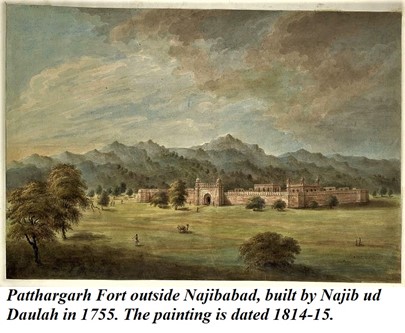
The Northwest Frontier The Three Swords of Meer Jaffir (Part 1 & Part 2) Gun Running to the Northwest Frontier A Tale of Subedar Major Mauladad (1822-1890) The Buddhist Road and The Storming of the Malakand Pass 1895 The Guides Saab Ka Risala 1846-1900 Safe Conduct – A tale about Syed Wazir Ali (Part 1 & Part 2) Under The Raj Revisiting the Great Arc of the Meridian Neither Freedom nor Salt The Lahore Cantonment of Mian Mir Vale Hunting in India and the Peshawar Vale Hunt Feeding the Armies of the Raj Eating Curries in London Signposts, Tablets & Way Markers of the Raj British Indian Army & State Forces Under Pelican Wings— Bahawalpur State Forces On the Departure of Gowhar-i-Taj’s Own Infantry Battalion to Burma. The Irregular Cavalry through the Lens of a Painting The Indian Mountain Artillery Soldiers of the Salt Range Subedar Major Mauladad The Anglo-Sikh Wars Ranjit Singh Ka Topkhana Part 1 Ranjit Singh Ka Topkhana Part 2 Ranjit Singh Ka Topkhana Part 3 The Anglo-Sikh Wars & The Battle of Chillianwala Finding Zamzama’s Twin The Death of Capt John Anderson, Bengal Artillery Roads, Railways & Bridges Bridging the Mighty Indus Crossing Rivers in Punjab On the Tracks of the Frontier Mail Pre Independence Personalities Who was Sahabzada Sir Abdus Samad Khan A Gnarled Oak with a Broken Heart Heritage Of Sahabzada Yaqub Dr Khalifa Abdul Hakim – The Islamic Cultural Renaissance Philosopher 24 Marris Road, Aligarh – Dr Abdullah Butt Maj Gen Syed Shahid Hamid An Indian Lieutenant at the 1936 Berlin Olympics The Power of a Mother’s Prayers A Muslim Instructor at Staff College Entering the Hallowed Ranks of the Indian Political Service. Edit Template WHO WAS SAHABZADA SIR ABDUS SAMAD KHAN? March 28, 2026 Syed Ali Hamid Many would recognize the name of Sahabzada Yaqub Khan – general and foreign minister, but they would not be familiar with the name of his father Sahabzada Sir Abdus Samad Khan. He was a gentlemen of great stature and a leading administrator in British India during the 1920s and 1930s. Sir Samad was from the clan of Rohillas who migrated from the Pashto-speaking regions during the decline of the Mughal Empire. Between the 17th and 18th centuries, they gained control of a region of western Oudh that came to be known as Rohilkhand. Sir Samad belonged to a very distinguished lineage from Najib Khan a Yusafzai Pathan who was an ally of Ahmed Shah Durrani. He was commanding a force of Rohillas in the Third Battle of Panipat which changed the course of Indian history. He founded the State of Najibabad and in 1973 was granted the title of Najib-ud-Daula by the Mughal Emperor Ahmed Khan. However, during the rebellion of 1857, his successor fell afoul of the British and was executed. The family fled Najibabad and was given shelter by their kinsmen and rulers of Rampur. Sir Samad’s grandfather, Nawab Jalal ud-din had three sons. The eldest was Azim ud-din Khan who was born in Najibabad, in 1854 and entered the Rampur State Forces. He was a very capable officer who would have been the ruler of Najibabad if the state had survived and rose to be the Sipha Salar (C-in-C) and Vice-President of Rampur Regency Council. The second son was Sahibzada Hamid uz-Zafar who joined the ICS in 1878 and rose to be Vice-President of the Rampur Administrative Council in 1894. He was seconded to the Indian Political Service for two years and served in senior posts in the Sates of Jodhpur and Alwar. The third son and Sir Samad’s father was Nawab Abdussalam Khan. He was a bibliophile and amassed a large library of books. Like many Indian Muslims of that period, he was a great admirer of Turkey and was always attired in the fez and tunic. Sir Samad was born in 1874 in Moradabad and educated in Lucknow. At the age of 13 years, Nawab Hamid Ali Khan ascended the throne of Rampur under a regent appointed by the British. As vice-regent, General Azimuddin Khan, was in charge of his ward’s education. Since the nawab and Abdus Samad were of the same age, the two boys were educated together at Rampur in Arabic, English, Urdu, and Persian by tutors who demanded a high standard from their students. His English tutor called him MacDuff and it became his nickname. In the meantime, his brother, Abdul Wahid Khan read Law at Oxford, was admitted to the Bar from Lincoln’s Inn, and retired as a judge. At Oxford he was befriended by M.A. Jauhar, who became a journalist and was a prominent member of the Muslim League, and among the leading figures of the Khilafat Movement. General Azimuddin was a reformer and a good administrator, but the orthodox Rohilla nobles detested him because he restricted their massive loans many of which were unpaid. As a result of court intrigues, he was murdered in 1891 when he was only 37 years old. Shortly after, the 21-year-old Nawab Hamid was invested with complete ruling powers and he appointed Sir Samad as his Private Secretary. In 1900, at the age of 26 years, Sir Samad was elevated to the post of Chief Minister which he continued to hold for 30 years. In 1907, he constructed a double story mansion in Rampur whose architecture was a fusion of both western and eastern styles. As per the traditions followed in that era, the mansion had male and female quarters with their own courtyards, verandahs and bedrooms. In her autobiography, his daughter Jahanara recollects that it was a full house with her grandmother along with her entourage and other relatives with their children and there were servants everywhere. The mansion had an extensive estate with lawns and flower beds, a mango grove, mosque, stables, a ghat [washing pit] for the dhobi [washer man], and servant quarters. Sir Samad had a rose garden prepared in front of his bedroom window and because he loved the flower so much, the
THE HERITAGE OF SAHABZADA YAQUB KHAN
The Northwest Frontier The Three Swords of Meer Jaffir (Part 1 & Part 2) Gun Running to the Northwest Frontier A Tale of Subedar Major Mauladad (1822-1890) The Buddhist Road and The Storming of the Malakand Pass 1895 The Guides Saab Ka Risala 1846-1900 Safe Conduct – A tale about Syed Wazir Ali (Part 1 & Part 2) Under The Raj Revisiting the Great Arc of the Meridian Neither Freedom nor Salt The Lahore Cantonment of Mian Mir Vale Hunting in India and the Peshawar Vale Hunt Feeding the Armies of the Raj Eating Curries in London Signposts, Tablets & Way Markers of the Raj British Indian Army & State Forces Under Pelican Wings— Bahawalpur State Forces On the Departure of Gowhar-i-Taj’s Own Infantry Battalion to Burma. The Irregular Cavalry through the Lens of a Painting The Indian Mountain Artillery Soldiers of the Salt Range Subedar Major Mauladad The Anglo-Sikh Wars Ranjit Singh Ka Topkhana Part 1 Ranjit Singh Ka Topkhana Part 2 Ranjit Singh Ka Topkhana Part 3 The Anglo-Sikh Wars & The Battle of Chillianwala Finding Zamzama’s Twin The Death of Capt John Anderson, Bengal Artillery Roads, Railways & Bridges Bridging the Mighty Indus Crossing Rivers in Punjab On the Tracks of the Frontier Mail Pre Independence Personalities Who was Sahabzada Sir Abdus Samad Khan A Gnarled Oak with a Broken Heart Heritage Of Sahabzada Yaqub Dr Khalifa Abdul Hakim – The Islamic Cultural Renaissance Philosopher 24 Marris Road, Aligarh – Dr Abdullah Butt Maj Gen Syed Shahid Hamid An Indian Lieutenant at the 1936 Berlin Olympics The Power of a Mother’s Prayers A Muslim Instructor at Staff College Entering the Hallowed Ranks of the Indian Political Service. Edit Template THE HERITAGE OF SAHABZADA YAQUB KHAN March 28, 2026 Syed Ali Hamid There were a large number of Pathan Riasaten (kingdoms) in the Indian Subcontinent but only 21 survived the upheaval of 1857 and were recognized as States by the British. While Amb, Dir and Swat were situated in the northwest, the majority were in Punjab and United Province (UP), with a few in Rajasthan and elsewhere. One of those that didn’t survive was the riasat of Najibabad which lay in the northwestern corner of Awad (present UP). Sahabzada Yaqub Khan traced his Pathan ancestry to Nawab Najibud Daula a.k.a Najib Khan who was a Yusufzai Rohilla of the Umar Khel clan. In 1739 he travelled to Rampur from Swabi, near Mardan, and joined his uncle, Bisharat Khan, who was serving Nawab Ali Muhammad Khan, a Rohilla chieftain. In 1743 he was appointed Jamadar and married the daughter of Dundey Khan another Rohilla chieftain. He served his father-in-law well both politically and militarily and was awarded 14 Parganas (in present days, a Pargana is equivalent to a tehsil or group of villages). In 1751 he took a leading role in fighting against the forces of Safdar Jang who had driven the Rohillas into the Kumaon Hills and was awarded the command of 1000 soldiers. Safdar Jang (1708 – 1754), was a major figure at the Mughal court during the declining years of the empire and in 1739 he was appointed the second Nawab Vizier of Awadh. He rebelled against the emperor and with the help of the Jats, besieged Shahjahanabad (as Delhi was renamed). The emperor was anxious to obtain help from the Rohilals but under a threat from Safdar Jang their sardars remained neutral. Najib Khan scorned their cautious and timid policy and went to the assistance of the emperor. By this one act, he rose from being a dependent of the Rohilla sardars to a leading political and military figure in Northern India. He was received by Emperor Ahmed Khan in June 1753 and was granted the title of Najibud Dulah and the mansab (command) of das hazar (ten thousand) troops. He successfully fought off the besiegers and negotiated an end to the siege for which he was further honored by the emperor. However, while he was away in Saharanpur where he had been appointed the Nazim (governor), the previous emperor was deposed by the imperial vizier ʿImād al-Mulk who placed Alamgir II on the throne. When Najibud Daulah came to submit allegiance to the new emperor, a rift was developing between him and the vizier. Imad had incurred the displeasure of Ahmed Shah Durrani by seizing Lahore and the Afghan king marched on to Delhi. The next 3 years is a complicated episode of wheeling and dealing involving the Marathas, Najib, Abdali, Imad, and Shujaud Daulah, the new Nawab of Awadh, that lead up to the final showdown – the Third Battle of Panipat in 1761. Shuja vacillated till the last because the Marathas had helped his father on numerous occasions but ultimately sided with Abdali and his lieutenant Najib. The Afghans were supported by four key allies: The Rohillas under the command of Najib, the Baloch Khanate of Kalat, the Awadh State under Shujaud Daulah, and troops of the declining Mughal Empire. The battle combined three preliminary skirmishes before the main engagement on 4 January 1761. In the second skirmish, which was fought on 7 December 1760, the Rohillas made a violent but unplanned assault on the Maratha’s camp an hour and a half before sunset. It came close to victory but remained unsupported due to the approaching darkness. Najib lost 3,000 Rohillas and was nearly killed himself. The main battle was a clash between the heavy artillery and cavalry of the Marathas against the heavy cavalry and the more mobile mounted artillery (zamburak and jezail) of the Afghans and Rohillas. Fortunes ebbed and flowed and at one stage the Maratha army nearly achieved a breakthrough in the center and right. However, Najib’s troops on the left held, and Abdali committed his reserves to turn the tide. The Maratha soldiers were too exhausted to resist because their army had been surrounded for days and was starving. Following his victory, Abdali returned to Afghanistan never to return but did not appoint Najib as vizier
DR KHALIFA ABDUL HAKIM – THE ISLAMIC CULTURAL RENAISSANCE PHILOSOPHER
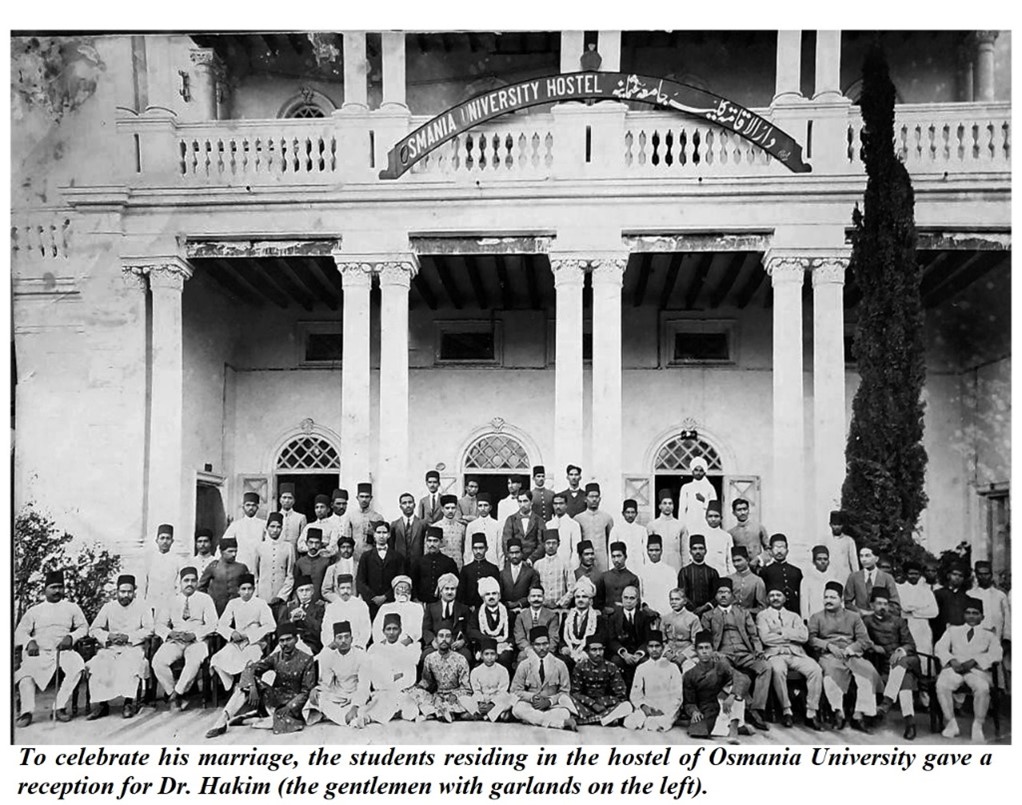
The Northwest Frontier The Three Swords of Meer Jaffir (Part 1 & Part 2) Gun Running to the Northwest Frontier A Tale of Subedar Major Mauladad (1822-1890) The Buddhist Road and The Storming of the Malakand Pass 1895 The Guides Saab Ka Risala 1846-1900 Safe Conduct – A tale about Syed Wazir Ali (Part 1 & Part 2) Under The Raj Revisiting the Great Arc of the Meridian Neither Freedom nor Salt The Lahore Cantonment of Mian Mir Vale Hunting in India and the Peshawar Vale Hunt Feeding the Armies of the Raj Eating Curries in London Signposts, Tablets & Way Markers of the Raj British Indian Army & State Forces Under Pelican Wings— Bahawalpur State Forces On the Departure of Gowhar-i-Taj’s Own Infantry Battalion to Burma. The Irregular Cavalry through the Lens of a Painting The Indian Mountain Artillery Soldiers of the Salt Range Subedar Major Mauladad The Anglo-Sikh Wars Ranjit Singh Ka Topkhana Part 1 Ranjit Singh Ka Topkhana Part 2 Ranjit Singh Ka Topkhana Part 3 The Anglo-Sikh Wars & The Battle of Chillianwala Finding Zamzama’s Twin The Death of Capt John Anderson, Bengal Artillery Roads, Railways & Bridges Bridging the Mighty Indus Crossing Rivers in Punjab On the Tracks of the Frontier Mail Pre Independence Personalities Who was Sahabzada Sir Abdus Samad Khan A Gnarled Oak with a Broken Heart Heritage Of Sahabzada Yaqub Dr Khalifa Abdul Hakim – The Islamic Cultural Renaissance Philosopher 24 Marris Road, Aligarh – Dr Abdullah Butt Maj Gen Syed Shahid Hamid An Indian Lieutenant at the 1936 Berlin Olympics The Power of a Mother’s Prayers A Muslim Instructor at Staff College Entering the Hallowed Ranks of the Indian Political Service. Edit Template DR KHALIFA ABDUL HAKIM – THE ISLAMIC CULTURAL RENAISSANCE PHILOSOPHER March 28, 2026 Syed Ali Hamid If we were to describe Dr. Khalifa Abdul Hakim in one word, we would say that he was a ‘sage’. He was a thinker, philosopher, and poet, who authored several books on Islam and literature. He also knew seven languages and translated books from English and German into Urdu. He was highly respected by brilliant minds of his time like the great poet-philosopher Allama Iqbal and Rabindranath Tagore, the Bengali poet and mystic and the Nobel Laureate for Literature. Khalifa Sahib was the product of an era during which there was an awakening amongst the Muslims of the subcontinent. Born in 1896, he lost his father at an early age but was guided by a sagacious mother who recognized his talents and encouraged him to pursue his ambitions. His education began in Lahore from where he went to MAO College, Aligarh, and finally completed his Bachelors’ from St Stephen’s College, Delhi. He then enrolled in its Department of Philosophy for a Masters’ degree and secured record-breaking marks. Iqbal and Khalifa Sahib shared a Kashmiri ancestry and a close relationship. Though there was an age difference of nearly 20 years, there was a great deal of respect of each other’s capabilities and commonality in their thoughts on religion, Eastern and Western philosophy, literature and poetry. When Nizam Osman Ali Khan established the Osmania University in Hyderabad in 1918, Dr. Iqbal declined the offer of the post of the head of the Department of Philosophy but recommended Khalifa sahib. He wrote to the Nizam, “Khalifa Abdul Hakim, too, is Iqbal in his own way.” Khalifa Sahib was only 22 years old when he became a founding professor in the department. In 1922, Khalifa Sahib left for Europe with his small family on a scholarship provided by the Nizam. He first learnt German and then became a research scholar at the universities of Freiberg, Heidelberg, Sorbonne (Paris) and Cambridge. In 1925 he was awarded a Doctorate in Philosophy from Heidelberg University. Coincidently, 20 years earlier Dr. Allama Iqbal also spent time at Heidelberg studying Philosophy and Literature as well as German and was so fond of the city that he wrote the poem “Ek śhām Nekar ke kināre” (An Evening on the bank of the Neckar). Interestingly, both did their doctorates in philosophy on similar thesis: Iqbal on The Development of Metaphysics in Persia”, and Khalifa Sahib on the Metaphysics of Rumi. Allama Iqbal considered Jalal ud Din Rumi (1207-73), as his murshid or spiritual teacher. Khalifa Sahib then returned to Osmania University and at the age of 29 years was appointed as the Head of the Department of Philosophy. Osmania was the seventh university to be established in India and was the first with Urdu as the medium of instruction which the Nizam considered “the language of the widest currency in India.” To enable his students to study philosophy in Urdu, Khalifa Sahib translated two English texts: Weber’s History of Philosophy, (Tareekh e Falsifa e Hayat), and Varieties of Religious Experiences by William James (Nafsiyat o Vardat e Ruhani). He also translated two texts from German: Outline of Greek Philosophy by Eduard Zeller (Mukhtasir Tareekh Falsafa e Yunan), and History of Modern Philosophy by Harold Foffding (Tareekh Falsifa e Jadeed). Khalifa Sahi also contributed several articles to the university magazine, delivered public lectures, and presided over literary functions and Mushairas (poetry recitals). Krishen Parshad, the prime minister of the state, who patronized the arts, appreciated the role of Khalifa Sahib. Mrs. Sarojini Naidu one of India’s feminist luminaries was another of his admirers. Rabindranath Tagore had established an open-air college at Santiniketan in West Bengal which became the Visva-Bharati University after Independence. The same year that Dr. Hakim returned from Heidelberg, he was asked by Tagore to request the Nizam to establish an Islamic Centre at Shantineketan. He also offered Dr. Khalifa to be the first to occupy the Chair of Islamic Studies. Dr Hakim arranged a grant from Hyderabad State but declined the offer of the Chair as he wanted to serve the community on a large scale. Khalifa Sahib remained with Osmania University for nearly 20 years. Khalifa Sahib wrote extensively on One World, One God, One Humanity. His role in
THE DOCTOR AT 24 MARRIS ROAD, ALIGARH
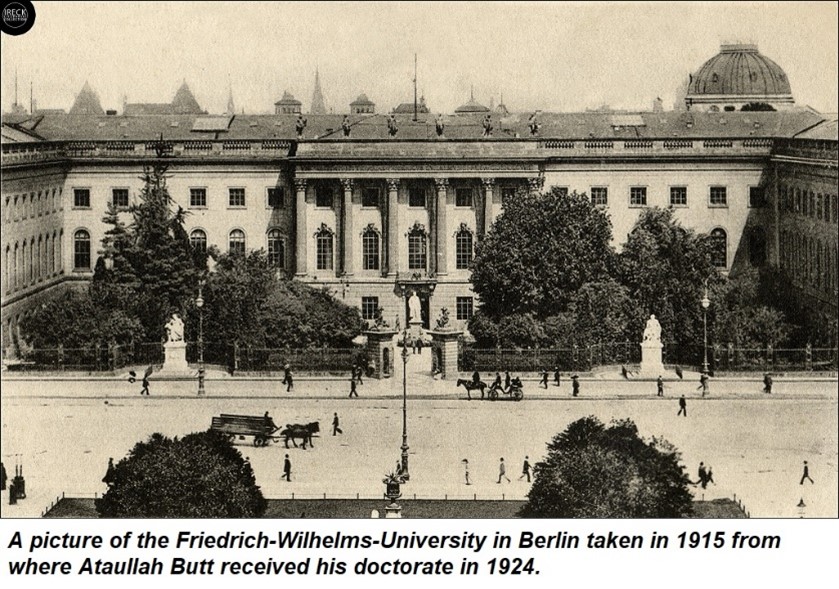
The Northwest Frontier The Three Swords of Meer Jaffir (Part 1 & Part 2) Gun Running to the Northwest Frontier A Tale of Subedar Major Mauladad (1822-1890) The Buddhist Road and The Storming of the Malakand Pass 1895 The Guides Saab Ka Risala 1846-1900 Safe Conduct – A tale about Syed Wazir Ali (Part 1 & Part 2) Under The Raj Revisiting the Great Arc of the Meridian Neither Freedom nor Salt The Lahore Cantonment of Mian Mir Vale Hunting in India and the Peshawar Vale Hunt Feeding the Armies of the Raj Eating Curries in London Signposts, Tablets & Way Markers of the Raj British Indian Army & State Forces Under Pelican Wings— Bahawalpur State Forces On the Departure of Gowhar-i-Taj’s Own Infantry Battalion to Burma. The Irregular Cavalry through the Lens of a Painting The Indian Mountain Artillery Soldiers of the Salt Range Subedar Major Mauladad The Anglo-Sikh Wars Ranjit Singh Ka Topkhana Part 1 Ranjit Singh Ka Topkhana Part 2 Ranjit Singh Ka Topkhana Part 3 The Anglo-Sikh Wars & The Battle of Chillianwala Finding Zamzama’s Twin The Death of Capt John Anderson, Bengal Artillery Roads, Railways & Bridges Bridging the Mighty Indus Crossing Rivers in Punjab On the Tracks of the Frontier Mail Pre Independence Personalities Who was Sahabzada Sir Abdus Samad Khan A Gnarled Oak with a Broken Heart Heritage Of Sahabzada Yaqub Dr Khalifa Abdul Hakim – The Islamic Cultural Renaissance Philosopher 24 Marris Road, Aligarh – Dr Abdullah Butt Maj Gen Syed Shahid Hamid An Indian Lieutenant at the 1936 Berlin Olympics The Power of a Mother’s Prayers A Muslim Instructor at Staff College Entering the Hallowed Ranks of the Indian Political Service. Edit Template THE DOCTOR AT 24 MARRIS ROAD, ALIGARH March 28, 2026 Syed Ali Hamid In 1947, my mother Tahirah, and her eldest sister, Amina were the only two members of their family who migrated to Pakistan, leaving behind their parents, two brothers, and a sister. Their parents continued to live alone in the university town of Aligarh. During the 1950s and early 1960s, my mother with her children in tow, paid her parents a yearly visit, taking off from Walton at Lahore, landing in Delhi and then catching a train for Aligarh. My grandfather whom we called Baba Jan did not own a car and took us home from the railway station in a small cavalcade of cycle rickshaws. Near the Civil Lines, the cavalcade turned off Station Road onto Marris Road which was flanked by large houses and the one at 24 Marris Road was built by my grandfather. My father was a senior officer in the Pakistan Army and for as long a duration that my mother was visiting her parents, a man from the government security masquerading as a fruit seller placed himself next to the gate. Most of the large houses in Aligarh were called either Manzil, Haveli or Kothi preceded by the name of the owner. However, my grandfather’s house was named Ashiana. It was constructed during the 1930s and based on typical bungalow typology having an arcaded porch in the front with a verandah on a raised plinth, high ceilings, and a long central corridor with sitting, dining and bedrooms on either side. The 3-acre compound was neglected because Baba Jan was not well-off after his retirement but the most attractive feature of the house for us children was an adjoining mango orchard, a Persian Water Wheel that still drew water, and a large enclosed patio at the rear of the house along a deep verandah where we slept in summer. Baba Jan’s name was Ataullah Butt. His parents migrated from Kashmir to Sialkot where he was born in the same locality as Allama Iqbal. He graduated from Lahore and was married around 1910 to Ameer-un-Nisa whose parents lived in Mochi Gate, Lahore. Her brother was Khalifa Abdul Hakim who received his doctorate from Heidelberg University in Philosophy. For his degree in medicine, Dr. Butt went to the Friedrich-Wilhelms University in Berlin which was established in 1810 and was one of the largest universities in Germany. Its archival records show that Ataullah Butt was registered on 30 April 1923 under registration no. 4790 / 113. On 2 May 1924, he received his doctorate with the dissertation “On tuberculosis of the lacrimal gland”. That same year his brother-in-law, Khalifa Hakim received his doctorate with a dissertation on the Metaphysics of Rumi. He was appointed as one of the founding professors of the Department of Philosophy at Osmania University on the recommendation of Dr. Allama Iqbal and remained as head of the department from 1925 till 1943. The British disliked employing Indians who had been educated in Germany. One of the leading personalities who was associated with establishing the University in Aligarh was Sahabzada Shehzad Ahmed Khan, the brother of Sahabzada Aftab Ahmed Khan. The university was in need of a medical officer and when Dr. Butt returned to India, Shehzad Ahmed arranged for him to be appointed to this post in 1925 and Dr Butt established a first-class medical department for the health care of the students. The Pathan boys at the university often carried knives and once a while injured each other. They then had to come to Dr. Butt to be patched up but were very frightened in case they were reported. It would have led to them being expelled. However, Dr. Butt used to reassure them by saying, “It is not my job to report you but to repair you”!!! That same year, the government of U.P. decided to establish a department of Ayurvedic and Unani system of medicine at Aligarh and in 1927, awarded a recurring grant of Rs, 50,000/- per year. The charge was given to Dr. Butt and the department made rapid progress. A laboratory with X-ray equipment and a collection of pathological specimens enabled the students to receive training in the latest methods of diagnosing diseases. A museum of anatomy was established with a large collection