RANJIT SINGH KA TOPKHANA – Part 1

In 1801 the Lahore Fort witnessed the investiture of Ranjit Singh as Maharaja of an Empire that he established and ruled till his death in 1839.
RANJIT SINGH KA TOPKHANA – Part 2

My first article on Ranjit Singh’s Topkhana focused on the development of guns for the Sikh artillery.
THE DEATH OF CAPT JOHN ANDERSON, BENGAL ARTILLERY

It was not unusual in the army of the East India Company and its successor for two or more brothers serving around the same time.
FEEDING THE ARMIES OF THE RAJ

Most of us are aware of the name of the business magnate Syed Babar Ali and his family firm of Wazir Ali Industries which owns Packages Limited and has many other large business interests in Pakistan.
NEITHER FREEDOM NOR SALT
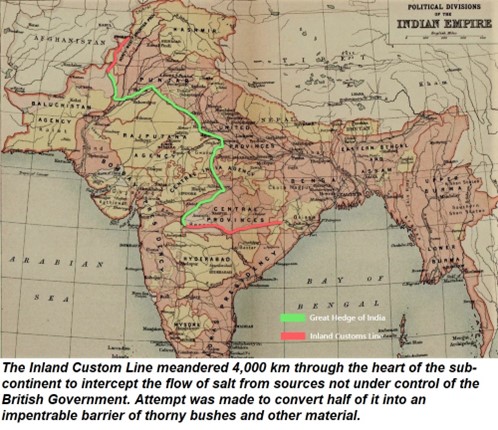
Many of you know about the Trump Wall, an expansion of the Mexico–United States barrier that started during the U.S. presidency of Donald Trump but have you ever heard about the Great Hedge of India – a monstrous undertaking of 4000 km across British India that was officially named the Inland Custom Line.
THE PESHAWAR VALE HUNT
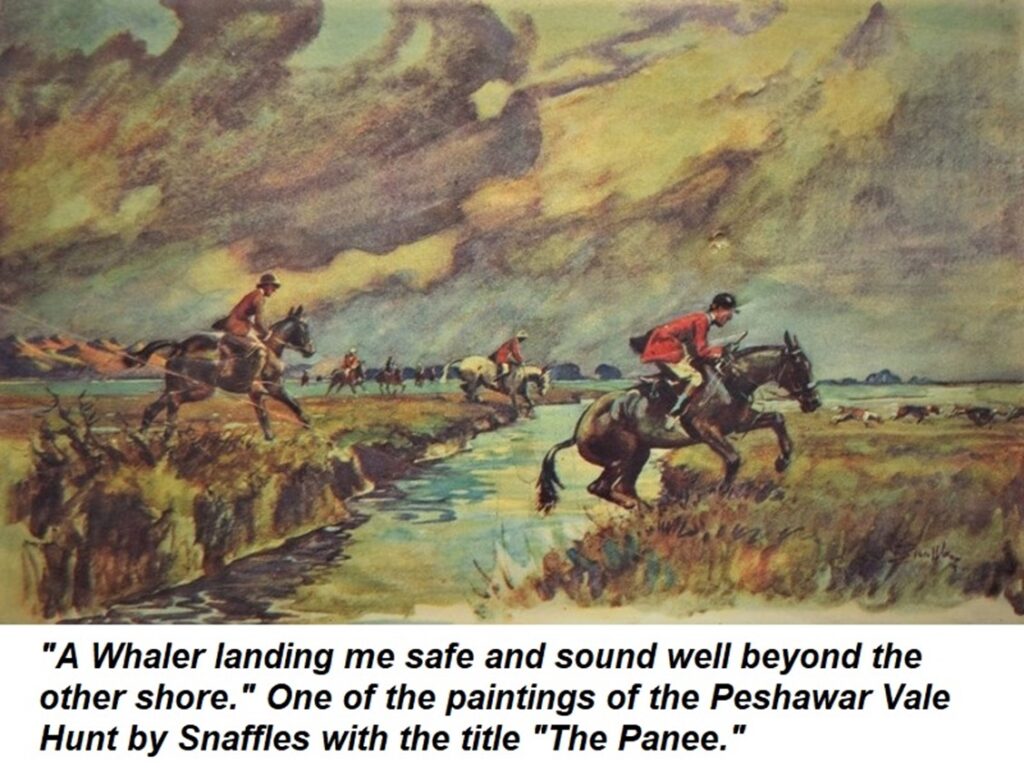
Vale Hunting was one of the mounted sports that the British savoured in the sub-continent. There were over 12 hunting clubs in India at Delhi, Meerut, Narbuda Vale, Jaora, Poona, Bombay, Bangalore, Ooty, Madras, Lahore, Quetta and Peshawar.
SIGNPOSTS TABLETS & WAY MARKERS
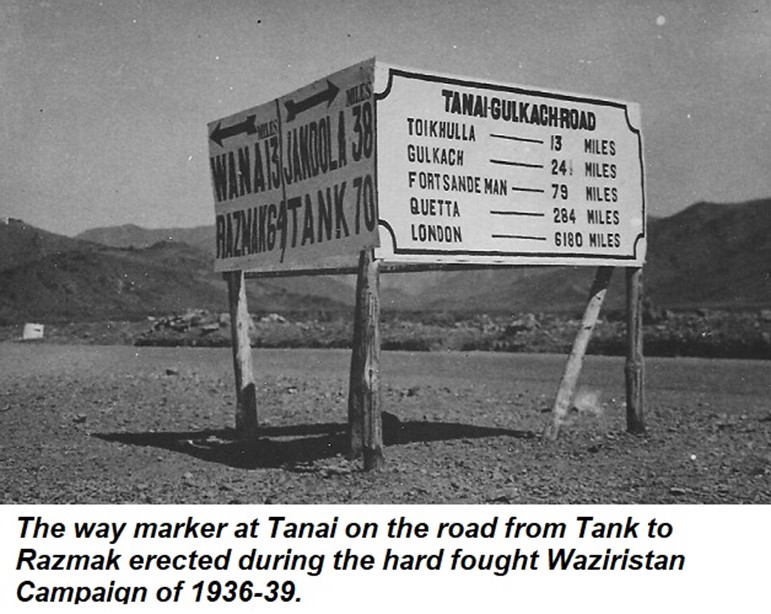
I have a collection of images of tablets, signposts and way markers that provides a varied and interesting perspective to the history of the Raj.
EPIDEMIC LHR MIAN MIR CANTT
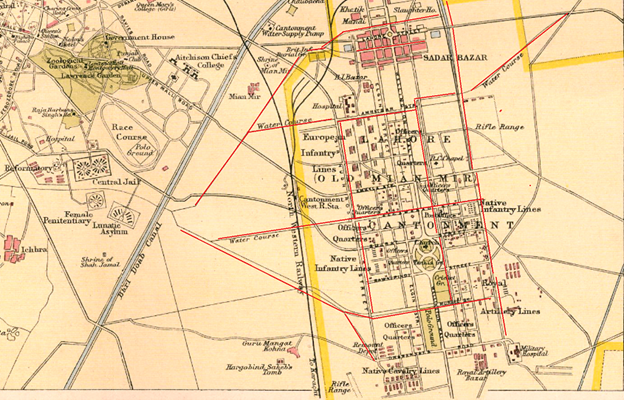
When Lahore was occupied in 1846, the British and Native troops encamped outside the walled city in the area known as Anarkali.
REVISITING THE GREAT ARC OF THE MERIDIAN
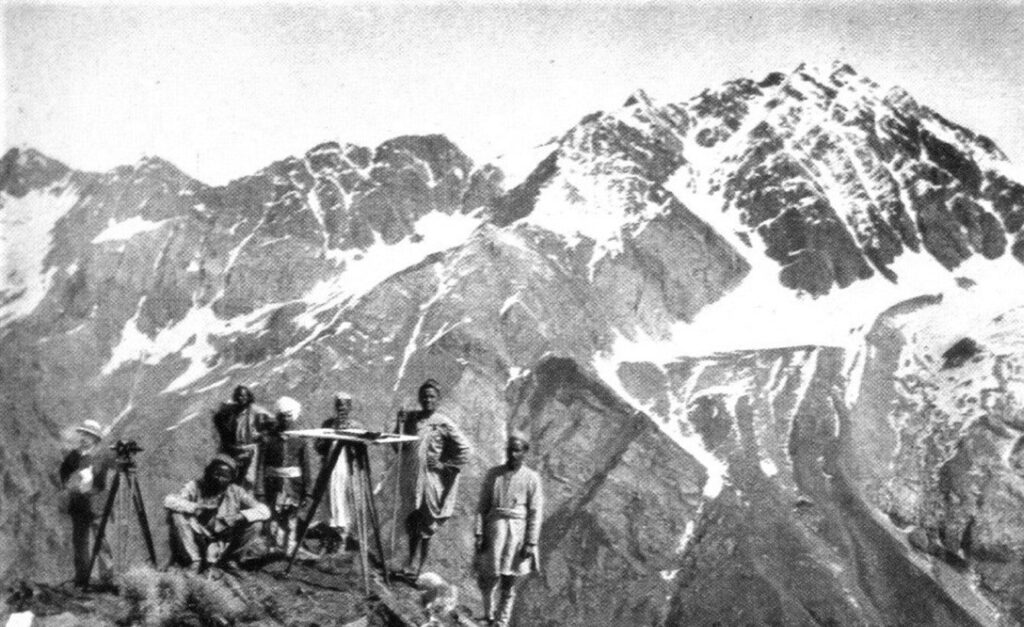
One of my endearing memories is standing in the cupola of the tank talking on the wireless set with a mug of tea in one hand and a map in the other.
EATING CURRIES IN LONDON

EATING CURRIES IN LONDON July 22, 2025 Major General Syed Ali Hamid Curries had started appearing on the menus of London restaurants since 1773. In the early nineteenth century, community centers for lascars started serving Indian cuisine. Lascars were Indian crews of commercial vessels which had started arriving at the East India Docks which opened in East London. There were about 470 lascars who had jumped ship to seek employment in London and some of them were cooks. Shortly after, the first proper restaurant exclusively for Indian cuisine opened on Portman Square. Its proprietor was Sake Dean Mahomed, from Patna in Bihar described as ‘a charming Bengali traveller, surgeon, entrepreneur, and captain in the British East India Company’, who established the Hindoostane Dinner and Hooka Smoking Club in 1810. Over time it came to be known as the Hindoostane Coffee House. The British were a coffee-drinking nation before they started drinking tea and it was fashionable to call restaurants coffee houses. Dean Muhammad decorated it in a Colonial style with bamboo chairs and walls full of pictures. The eastern atmosphere was enhanced by offering the ‘Hookha with real Chilm tobacco and Indian dishes of the highest perfection’. It was a popular restaurant and since most people still dined at home it was the first restaurant to offer takeaway. Unfortunately, it ran into financial difficulties and closed down in 1833. For the next 80 years, London did not have any Indian restaurants worth their name but things started changing in the twentieth century. Salut e Hind was the first to open in Holborn in 1911, followed by The Kohinoor’ in Roper Street, and Curry Café on Commercial Street in the 1920s. The Kohinoor did remarkably well and the three Bahadur brothers from Delhi opened more branches of Kohinoor in Cambridge and Manchester and the Taj Mahal in Brighton; Oxford and Northampton and all before the outbreak of the Second World War. Amongst the early Indian restaurants that became successful in London was ‘Shafi’ which opened in 1920. It was the brainchild of Nora Eileen Cronin, of English-Irish origin, who was married to Dr. Rahim, a surgeon at the Royal Dental Hospital. She wanted to establish an Indian restaurant and her brother-in-law offered to finance it. So she named it after him. When Rahim passed away, Nora continued running the restaurant and subsequently married Sadiq, who was training to be a doctor at Guy’s Hospital. For the next 15 years, she remained the owner of Shafi and entirely managed its affairs.Shafis opened on Gerrard Street (which is in London’s China Town) and initially catered to the ordinary. In a short time, it became a rendezvous for Indians – visitors, expatriates, and students who had grown in increasing numbers in the inter-war years. By 1931 there were over 1800 Indian students in the UK, a steep increase from only 100 in 1880. For all of those who came from a subcontinent where food and companionship went naturally together, Shafis was like being back home. But it wasn’t only students who frequented the resteraunt. Among its clientele were personalities like Allama Iqbal, the Quaid, and Sir Mian Muhammad Shafi, a well-known Punjabi lawyer and politician. So also were many Indian dignitaries who were invited to attend the Round Table Conferences conducted in the early 1930s. It was also patronized by the English, particularly those who had served in India and relished the flavor of genuine Indian food. The author’s father Maj Gen Syed Shahid Hamid and other Indian cadets who were being trained at the Royal Military Academy, Sandhurst and the Royal Air Force academy at Cranwell during the 1920s and 1930s also made a beeline for Shafis on their visits to London, for a welcome break from the bland English food they had to suffer in the academy. Sportsmen from India like Nawab Iftikhar Ali Khan Pataudi, the famous cricketer who captained the Indian team when it toured England in 1946 also dined at Shafis. The restaurant served high-quality Indian cuisine and was therefore frequented by patrons like Nawab Ali Khan of Akbarpur, known as ‘Nawab Chakkan’. The Nawab was a great gourmet and introduced items of Lucknow cuisine such as karelas (bitter gourd) and several daals (lentils) to the restaurant’s menu. Nora was an excellent hostess, friend, and confidant to everyone who came in whether to eat or just for the company. Even though many of her young customers were well-off, their stipends from India were frequently late. Nora devised a plan to help them without embarrassing them. She placed a large goldfish bowl filled with Five Pound notes outside the men’s lavatory. A notice next to it informed the Indian students that they could take whatever they required and replace it later. This worked like a charm and boosted the popularity of the restaurant. At the end of every month when she counted the money in the bowl, there was always more than what she had put in. With this extra money given to her by appreciative borrowers, she hosted a monthly meal for her regular diners. Shafis did good business till the Second World War but in 1940, Nora and Sadiq’s house on Talgarth Road, Kensington was hit by German bombers. They were evacuated to Wales where Sadiq became the area doctor and a general practitioner. Shafis was acquired by Dharam Lal Bodua and run by an English manager. Dharam was a close friend of Bahadur who opened The Kohinoor and he managed to run Shafis till the 1950s. In 1926, Veeraswamy the first high-end Indian restaurant in London opened on Regent Street where it still thrives today. Its founder Edward Palmer who was a retired Indian Army officer belonged to the same Palmer family mentioned in ‘The White Mughals’ by William Dalrymple. Edward’s great-grandfather William Palmer was a general in the East India Company and was married to Begum Fyze Baksh, a Mughal princess. In 1896 he had setup Veeraswamy & Co. in London to promote Indian food